

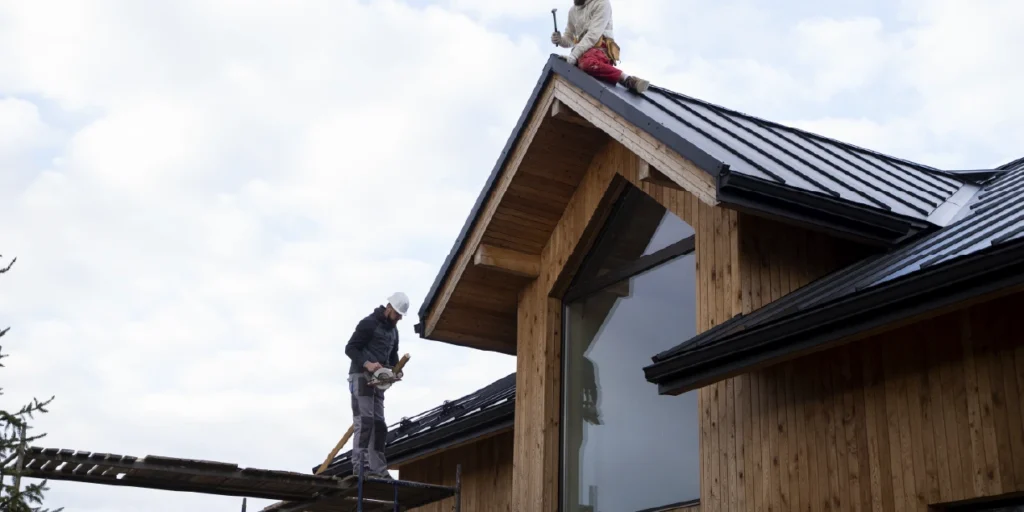
“How long will this actually take?” is one of the first questions almost every owner asks, and one of the hardest to answer honestly with a single number. A house build moves through several distinct stages, each with its own pace, and the total time depends on your plot size, the season you start in, how quickly finishing decisions get made, and how experienced the team managing it actually is.
Rather than give a number that may not apply to your project, this post walks through the stages themselves, so you know what a realistic timeline actually looks like and what tends to stretch it.
Most construction delays are not dramatic. They are small, quiet ones, a decision that took three extra weeks, a trade that started ten days late, and by the third one, an entire month has disappeared from the schedule.
The Stages A Build Actually Moves Through
Construction generally follows the same sequence regardless of project size. Planning and approvals come first, covering drawings and authority sign-off. Excavation and foundation work follows once the plot is cleared. Grey structure, the columns, beams, roof slabs and brickwork, is typically the longest single stage. Electrical and plumbing rough-in comes next, followed by finishing and interior work, and finally testing and handover, where systems are checked and any snag list items are closed before the keys change hands.
Grey structure and finishing are usually where most of the total timeline sits, since both involve sequential, weather-sensitive work that cannot simply be rushed by adding more labor on a given day.
Why Plot Size Changes The Timeline
Larger plots do not just mean more square footage, they mean proportionally more grey structure work and a larger finishing surface area to cover, which extends both of the longest stages in the build. A smaller home on a 5 Marla plot generally moves through the full process faster than a larger home on a 1 Kanal plot, simply because there is more physical work at every stage, not because anything is done differently.
Why The Season You Start In Matters
The monsoon season, roughly July through September, is difficult for excavation and large concrete pours in Islamabad and Rawalpindi, and starting a build during this window without proper scheduling can add real time to your foundation and structural stages. Spring and autumn generally offer more predictable working conditions for the earliest, most weather-sensitive parts of a build. This does not mean construction should never start outside those windows, it means the schedule needs to plan around the season rather than ignore it.
What Actually Extends A Construction Timeline
Beyond plot size and season, two things tend to matter more than owners expect going in. Late finishing decisions, choosing tiles, fixtures or cabinetry only once that stage has already arrived, tend to stall the trades waiting on those decisions rather than speeding anything up. Funding gaps work the same way, since a pause in payment usually means a pause in material purchases and labor mobilization, not just a delay in that specific line item.
Contractor experience plays a real role too. A team that plans stages ahead of time, rather than reacting day to day, tends to avoid the coordination gaps that quietly add weeks to a schedule, particularly on larger projects with more trades involved.
How To Get A Timeline That Actually Applies To You
General duration ranges are a useful starting point for planning, but your actual timeline depends on your specific plot, your finishing choices and when you start. The only reliable way to get a number worth planning around is a written project schedule from the construction company handling your build, tied to your actual scope and site conditions, not a generic industry range.
If you are planning a build in Islamabad, Rawalpindi or Azad Kashmir and want a realistic, project-specific timeline rather than a general estimate, AAN Builders can walk your site and lay out a schedule stage by stage before any work begins.